
Hunt the Mouse
Collaboration with Sqkii
A large-scale IRL treasure hunt in Singapore, combining a mobile game with real-world exploration where players use the app to locate and collect hidden coins.
Economy Design
Live Ops
Game Balancing
Gamification
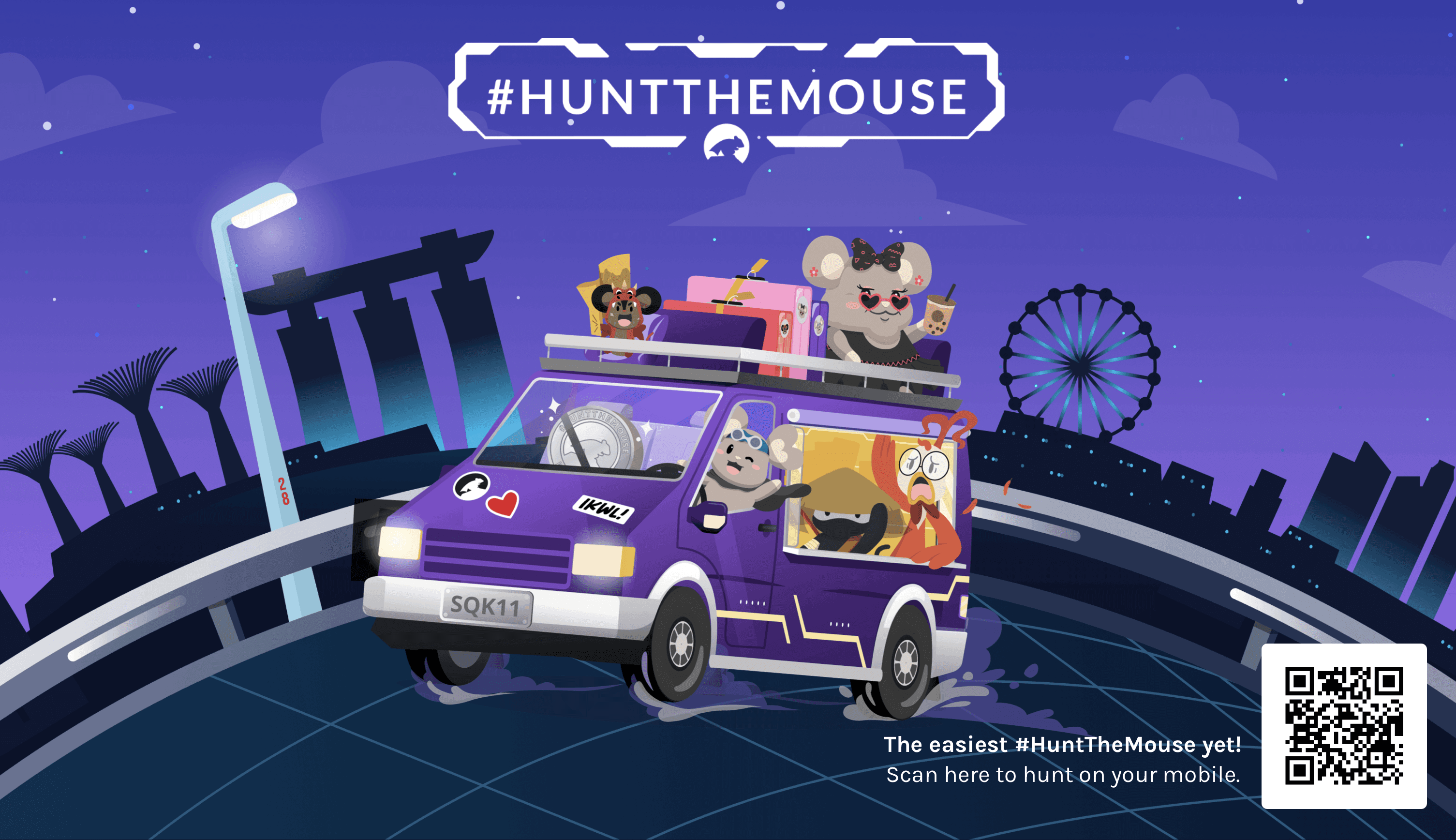
What is Hunt the Mouse?
Hunt the Mouse is a large scale IRL treasure hunt that happens on a yearly basis (with smaller editions happening throughout the year as well) in Singapore. It is a massive treasure hunt that attracted nearly 1M players throughout its run in both 2024 and 2025 and generated upwards of $1.4M in company revenue through sponsorships, +$3M in incremental revenue for participating brands, and an estimated overall company revenue of $2.7M.
For the special SG60 edition of Hunt the Mouse, I worked with Sqkii on enhancing the game experience. The 2024 edition of the Hunt, despite being successful, had various problems such as an overly complicated onboarding that churned users before it finished, boring powerups, retention issues, and one major problem being that HTM veterans were so good at finding coins that beginners or casual players didn't stand much of a chance and felt unmotivated to hunt for coins.
Fixing the Onboarding Process
A good onboarding respects the user’s time. Rather than bombarding them with lengthy walls of text, it should teach them through interactive play, and that was something mostly missing from the game.

The Problem
The old onboarding relied heavily on reading. Players were trapped in a frustrating loop: read a block of text, tap a button, read another wall of text, and repeat.
This passive approach caused several key issues:
High Drop-off: Reading long screens before seeing gameplay caused users to quit early.
Information Overload: Explaining complex economy layers, gameplay mechanics, and power-ups all at once overwhelmed players.
Cold GPS Prompts: Asking for location permissions right at launch without context led to high rejection rates.
Delayed Value: Players had to figure out currencies before trying core mechanics like circle shrinking, hiding the game's actual appeal.

The Solution
I redesigned the onboarding into a quick, two-stage interactive experience where players learn by doing.
Stage 1: 1-Minute Orientation
Less Text, More Action: Added an option to skip the intro video and used smooth map zooms with quick visual tips from our the company mascot, Timii.
Smart GPS Timing: Moved location requests to appear right after showing distance indicators, making it clear why GPS access is needed.
Interactive Filters: Automatically opened the map legend to guide users through toggling coin views and interacting with the Map
Stage 2: 3-Minute Interactive Tutorial
Guided Interaction: Used a pulsing circle on the map to show users where to tap without reading instructions.
Free Power-Up Trial: Gave players a free Shrink power-up to try immediately with zero risk.
Instant Feedback: Shrinking the circle immediately demonstrated how power-ups narrow down physical search areas.
Real-World Visuals: Wrapped up with a brief video montage showing actual players finding hidden coins in public.